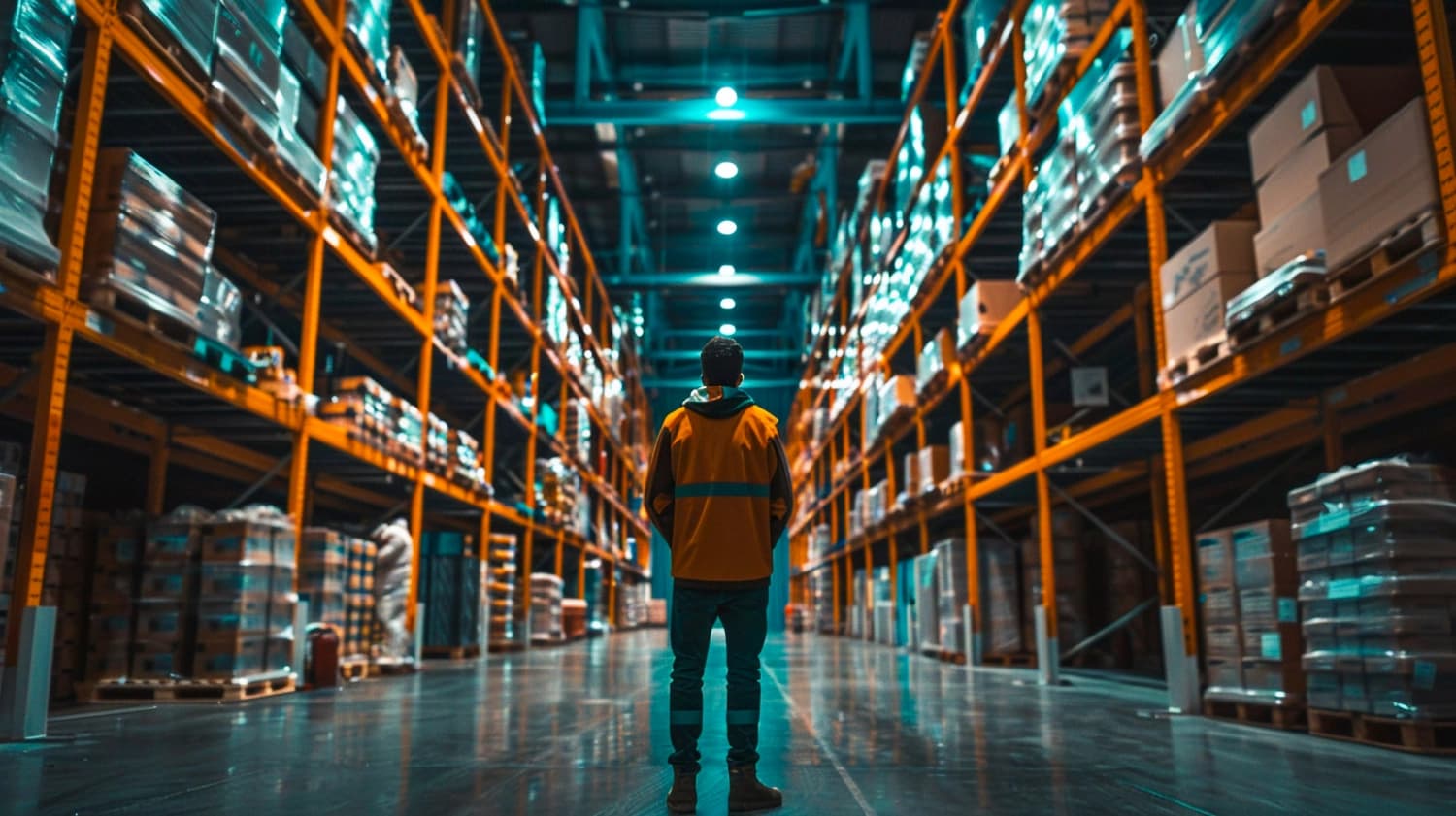
India's D2C boom has created a warehouse operations challenge unlike anything the market has seen before. Brands that launched with 50 orders per day are now handling 5,000. Products that sold on one channel now ship from a single warehouse to Shopify, Amazon, Meesho, Flipkart, and a network of quick-commerce dark stores simultaneously.
The tools that got D2C brands to their first milestone — spreadsheets, basic inventory plugins, manual pick-and-pack — collapse at scale. The brands that are pulling ahead are those that invested in AI-powered warehouse management before they hit the ceiling, not after.
These are the 6 AI WMS features that define high-performing D2C warehouse operations in India today.
Feature 1: Real-Time Multi-Channel Inventory Sync Across Shopify, Amazon, and Meesho
Selling the same inventory across multiple channels without real-time stock synchronisation is one of the fastest ways to destroy a D2C brand's reputation. An item sold on Shopify that is not immediately decremented from the Amazon listing can result in an Amazon oversell, a cancelled order, and a seller metric penalty that suppresses your listing for weeks.
Warewiser maintains a single inventory position that is the source of truth for every channel. When a unit is picked for a Shopify order, it is immediately removed from the available pool for Amazon, Meesho, and every other connected channel — in real time, not in a batch that runs overnight.
The sync is bidirectional. Returns received from any channel update the available inventory pool immediately — enabling faster resale of returned goods and reducing the dead-stock accumulation that quietly erodes margins.
Feature 2: Predictive Replenishment Before Stockouts Hit
For D2C brands, a stockout is not just a lost sale. It is a loss of marketplace ranking, a gap in customer acquisition when paid media is driving demand, and a recovery period measured in weeks when the product comes back in stock.
Traditional reorder points — set manually by category managers and reviewed infrequently — cannot keep pace with the velocity changes that characterise D2C operations. A product that moves 20 units per day on Tuesday can move 200 per day on a sale day, and 400 per day when a social media post goes viral.
Warewiser's AI replenishment engine analyses velocity trends, promotional calendars, historical sale event patterns, and current stock positions to trigger replenishment recommendations before a stockout is imminent — not after it has already happened. For fast-moving SKUs, the system adjusts replenishment quantities dynamically based on real-time sell-through rates.
Feature 3: Automated Picking Paths for High-Order-Volume Days
A normal day in a D2C warehouse is manageable with reasonable processes. A sale day — Big Billion Day, End of Season Sale, a brand-initiated flash event — is an entirely different operational reality. Order volumes that are typically 500–1,000 per day can hit 5,000–10,000 during a 24-hour peak.
Without optimised picking, the warehouse gridlocks. Pickers collide in aisles, work the same zones simultaneously, and walk far more than necessary because pick lists are generated without regard to spatial efficiency.
Warewiser's pick path optimisation generates the shortest-distance route through the warehouse for every pick list, automatically. During peak events, wave management groups orders by zone and allocates them to operators working dedicated sections — eliminating congestion and dramatically increasing throughput per operator per hour.
Feature 4: Returns Management and Reverse Logistics Workflows
India's D2C return rates are among the highest in the world — fashion categories routinely see 25–40% return rates. Without a structured returns process, returned goods pile up in a corner of the receiving area, are not reconciled with the original order for days, and are not available for resale until someone manually inspects and restocks them.
Warewiser's returns workflow receives each return against the original despatch record, records the condition (saleable, needs inspection, write-off), and directs disposition automatically. Saleable stock is immediately available for resale across all channels. Inspection-needed stock is quarantined until reviewed. The entire process is tracked from receipt to final disposition with full traceability.
Feature 5: GST-Compliant Invoicing Built Into Dispatch
For D2C brands shipping across state lines in India, every despatch triggers a GST event. The combination of IGST, CGST, and SGST calculations — across multiple product categories with different tax rates — creates significant finance team overhead when managed separately from the warehouse system.
Warewiser generates GST-compliant tax invoices and e-way bills automatically at the point of despatch. GSTIN-linked transactions ensure that every movement is recorded against the correct entity and tax classification — with no separate data entry required by the finance team. Reconciliation between warehouse and finance is eliminated because the two systems are the same.
Feature 6: Built to Scale from 500 to 50,000 Orders Per Day
The most expensive mistake a scaling D2C brand makes is implementing a WMS that fits today's volume but hits a ceiling in 18 months — forcing a re-implementation at the worst possible time, when the business is growing fastest.
Warewiser is architected on a cloud-native, horizontally scalable infrastructure. The same platform that handles 500 orders per day handles 50,000 — without a system upgrade, a capacity planning exercise, or a new implementation. You grow; the platform grows with you.
Channels Supported
20+
Shopify, Amazon, Flipkart, Meesho, WooCommerce and more
Sync Latency
Real-time
Inventory updated across all channels on every pick
Return Processing
< 10 min
From receipt to resaleable stock with Warewiser workflow
Scale
500–50,000
Orders per day on the same platform, no upgrade required
The D2C brands winning on operational efficiency in India are not the ones with the biggest warehouses or the most staff — they are the ones that invested in AI-powered warehouse management before operational complexity outpaced human coordination. Warewiser goes live in 48 hours. The question is not whether you need it — it is how much longer you can afford to wait.